
Central Asia · Kazakhstan
Altyn Emel: Singing Dune
Also known as Singing Dunes
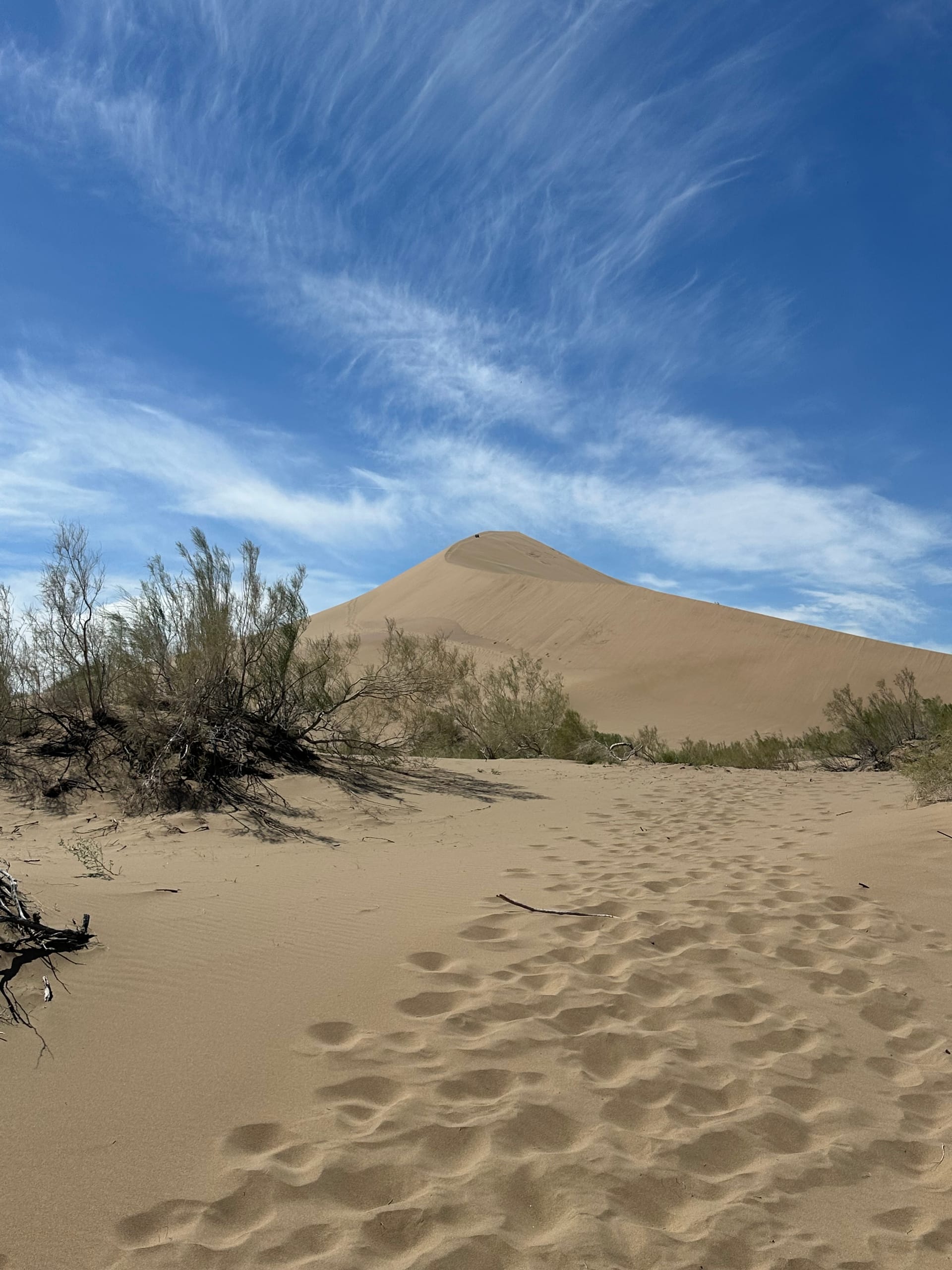
The Singing Dune is a 3-kilometer-long, 150-meter-high sand ridge in Altyn Emel National Park, roughly 280 km northeast of Almaty. When the wind blows or when you slide down the dune's face, the sand produces a low-frequency hum-sometimes described as a drone or subsonic vibration. The phenomenon occurs because the sand grains are dry, rounded, and uniform in size, allowing them to vibrate in sync when they move.
The dune sits in an arid basin between the Ili River and the Dzungarian Alatau mountains. It's not part of a larger desert; it's an isolated sand formation, held in place by surrounding terrain and wind patterns.
Altyn Emel: Singing Dune at a glance
One of 24 places we cover in Kazakhstan, with our own cars and guides.
Kazakhstan: every place and tour- Distance from Almaty
- ~280 km
- 4-5 hours by car
- Dune Height
- ~150 m
- 3 km long, 0.5 km wide
Photographer's Note
The dune faces roughly east-west. Late afternoon/evening light (17:00-19:00) gives warm golden tones and long shadows that accentuate the dune's ridges. Early morning is also good for side-lighting. Avoid midday when the sun is directly overhead-flat, harsh light. For the "singing" effect, you need dry conditions and a bit of wind or someone sliding down the dune face.
Heat and Isolation
Summer temperatures exceed 40 °C with no shade. Carry ample water (3+ liters per person) and avoid midday hiking. Mobile signal is absent-travel with others and inform someone of your plans.
What the name means
The Kazakhs call it "Äuen Qūm" (Singing Sand). "Altyn Emel" is the name of the national park and the wider area; it translates roughly as "golden saddle" or "painted saddle," likely referring to the varied colors of the landscape-golden sands, red cliffs, green river valleys.
Where it is
About 280 km northeast of Almaty, within Altyn Emel National Park. The dune sits between the Ili River (to the south) and the Dzungarian Alatau mountains (to the north), in a relatively flat, arid basin. Access requires driving through the park (entry permit needed); from the park gate near Basshi village, it's another ~40 km on dirt roads to the dune's base.
How it formed
The dune is a wind-deposited sand formation. Geologists believe the sand originated from ancient river and lake sediments, which dried and were then shaped by prevailing winds. The winds in this basin tend to blow from a consistent direction, which concentrates the sand into a stable dune rather than scattering it. The dune's size and shape have been relatively stable for centuries, though the surface shifts constantly with the wind.
The "singing" phenomenon occurs when sand grains-dry, well-sorted, and rounded by wind-move against each other in unison. This creates a resonance that produces audible sound, typically in the 70-105 Hz range (subsonic to low bass). Not all dunes sing; it requires specific sand characteristics and conditions (dry weather, stable dune structure).
Local legend
Local stories say the sound is the voice of spirits or shamans who were buried in the sands. Another version holds that the dune sings to warn travelers of coming sandstorms. These are folkloric explanations for a natural acoustic phenomenon, but they add to the dune's mystique. The scientific explanation (grain vibration resonance) doesn't diminish the eerie experience of hearing the sand hum beneath your feet.
People & history
The wider Altyn Emel area has been inhabited and traversed for millennia. Petroglyphs, burial mounds (kurgans), and archaeological sites in the park link the region to Saka, Usun, and later Turkic and Mongol groups. The Singing Dune itself has been known to locals for centuries-Kazakh herders and Silk Road travelers would have passed near it-but it gained wider attention in the Soviet era when the area was studied by geologists and eventually designated as a national park (1996).
Practical notes
- Best season
- All year. Spring and autumn are mild, summer mornings and evenings are the time to climb the dune, and winter is clear and crisp with the desert to yourself.
- Road conditions
- Long drive on a mix of paved and dirt roads. The final stretch inside the park is rough dirt/gravel; 4x4 recommended, though high-clearance sedans can manage in dry conditions.
- Permits/fees
- National park entry permit required (buy at the park gate near Basshi or at the park office in Almaty). Fees vary for Kazakhstani citizens vs. foreigners.
- Typical time needed
- Full day from Almaty (drive in, visit the dune, drive back). If you want to explore other park sites (Aktau, petroglyphs), plan 2-3 days and stay overnight in the park (guesthouses available in Basshi or park rest houses).
- What to pack
- Sun protection (hat, sunscreen, sunglasses), lots of water (no water sources at the dune), sturdy shoes or sandals for walking on sand, snacks, camera. Light, breathable clothing for hot weather.
- What can go wrong
- Heat exhaustion in summer (no shade at the dune). Sandstorms (rare but possible-check weather). Getting stuck on rough roads if you don't have appropriate vehicle/driver.
- Connectivity
- No mobile signal at the dune or most of Altyn Emel. Bring offline maps.
- Cash/cards
- Bring cash for park fees and any guesthouse/meal purchases. No ATMs inside the park; nearest cash is in larger towns (Almaty, Zharkent).
Altyn Emel: Singing Dune tours
3 private tours: only your group, our own car and guide, pickup at your hotel.
Nothing is charged when you book; 20% after we confirm, the rest on the day.
 Our pickGrand Zhetysu6 days · privateWith our guide and carfrom $1,250 /personfor a group of 5
 Singing Dune1 day · privateSinging Dune · Basshi villagefrom $100 /person$500 for the car of 5
 Altyn-Emel & Tamgaly Tas2 days · privateTamgaly Tas · Aktau hills · night in Basshi · Singing Dunefrom $230 /personfor a group of 5
More places in Kazakhstan
All 24 places in Kazakhstan Assy PlateauAssy Plateau is a high, flat grassland between the Turgen Gorge and the Bartogay Reservoir, at 2,300-2,700 meters elevation.
 Baikonur CosmodromeBaikonur Cosmodrome is the world's first and largest operational space launch facility, located in the desert steppes of south-central Kazakhstan.
 Kolsai LakesKolsai-often translated as "lake in the valley" or "valley of lakes"-comprises three main alpine lakes sitting in a single forested corridor on the east side of the Kung̈ey Ala-Tau range.
 ShymbulakShymbulak is Kazakhstan's premier ski resort, sitting in the Zailiyskiy Alatau mountains above Medeu.
 Saty GorgeSaty is a small village in the Kolsai Lakes National Park area, serving as the main base for visitors to Kolsai and Kaindy lakes.
 Tuzkol LakeTuzkol is a salt lake in the Raiymbek District of Almaty Region, sitting at 1,959 meters above sea level.
 Charyn CanyonCharyn Canyon stretches 154 kilometers east of Almaty along the Charyn River-named simply for the waterway that cut it.
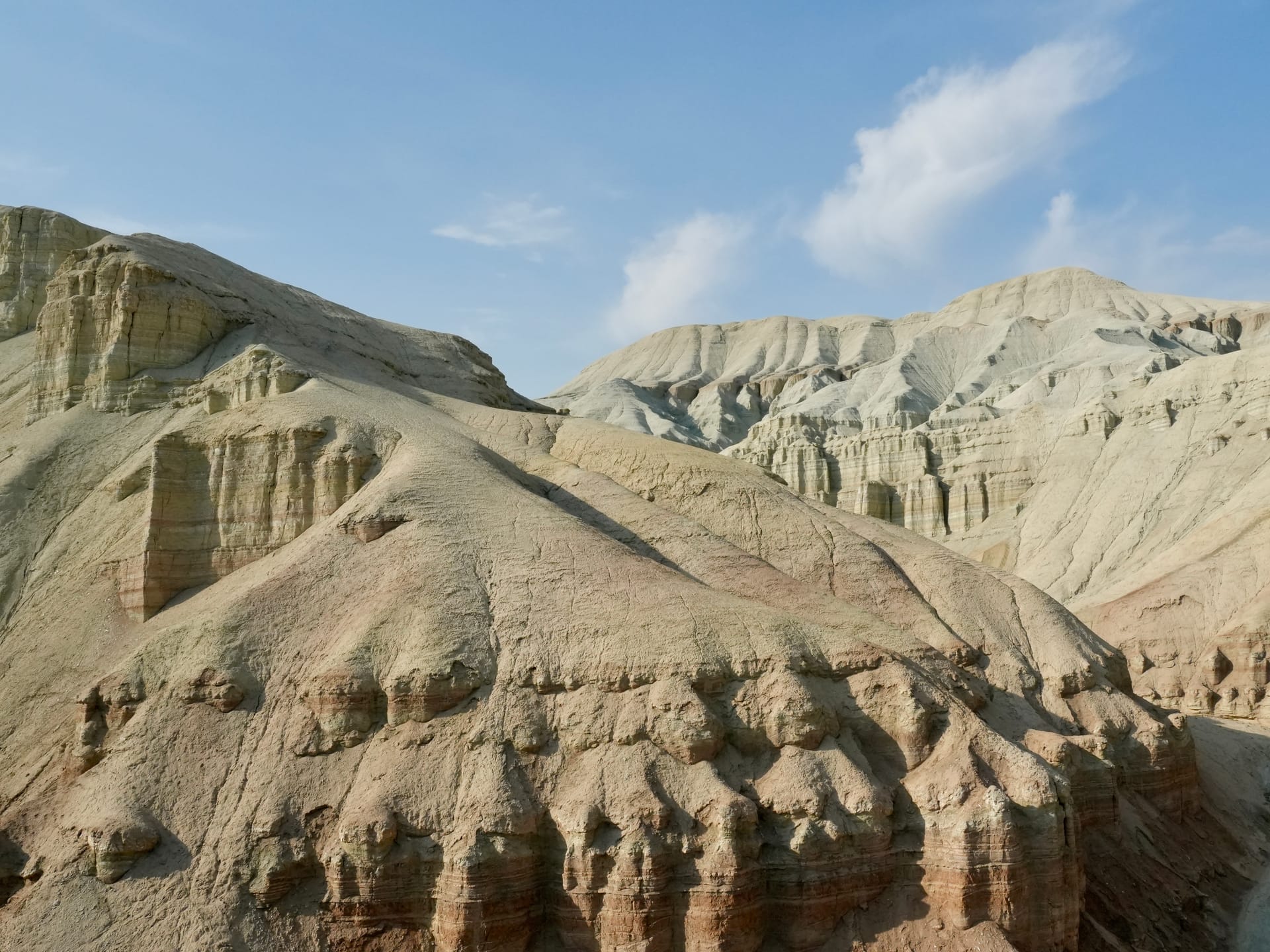
- Altyn Emel: Aktau MountainsThe Aktau Mountains are a surreal, almost lunar landscape of white, pink, red, and green striped hills in Altyn Emel National Park.
 Big Almaty LakeBig Almaty Lake sits at 2,511 meters in the Trans-Ili Alatau mountains, about 30 km south of Almaty.
 Kaindy LakeKaindy Lake formed after a 1911 earthquake triggered a landslide that blocked the Kaindy Gorge, creating a natural dam.
 Tamgaly TasTamgaly Tas is an archaeological site on the right bank of the Ili River, about 120 km north of Almaty.
 Zenkov CathedralZenkov Cathedral (officially Ascension Cathedral) sits in the center of Panfilov Park in Almaty.
 Bartogai ReservoirBartogay Reservoir was created in 2016 with the completion of a dam on the Chilik River, a tributary of the Ili.
 MedeuMedeu is an open-air ice skating rink built into a mountain valley at 1,691 meters above sea level, about 15 km south of Almaty.
- NarynkolNarynkol is a small settlement in the easternmost part of Almaty Region, near the border with China.
- Tekes GorgeTekes Gorge is a remote valley in the easternmost part of Almaty Region, near the border with China.
- Kastek PassKastek is a mountain pass and gorge on the main road from Almaty to Bishkek (Kyrgyzstan).
- Kurmetti GorgeKurmetti is a forested gorge in the Trans-Ili Alatau mountains, less visited than nearby valleys like Medeu or Turgen.
- Green BazaarGreen Bazaar (Zelyony Bazaar) is Almaty's oldest and largest food market, located in the city center near the Zhibek Zholy metro station.
- Turgen GorgeTurgen is a forested gorge in the Trans-Ili Alatau mountains, about 70 km east of Almaty.
- Karkara ValleyKarkara is a wide, grassy valley straddling the Kazakhstan-Kyrgyzstan border, at the foot of the Terskey Alatau range.
- Issyk LakeIssyk Lake sits at 1,760 meters in the Trans-Ili Alatau mountains, about 70 km east of Almaty.
- Kok-TobeKok-Tobe is a hill on the southern edge of Almaty, about 300 meters above the city center.
Questions before you book
Do you run day trips from Almaty?
Yes. Charyn Canyon, the Kolsai and Kaindy lakes, Big Almaty Lake, Altyn-Emel and more, in our own car with a driver and a guide, picking you up in Almaty. Every day trip is on our tours page with its price.
When is the best time to visit?
Any month, and each season shows the region differently. Summer is green and warm in the mountains, autumn brings golden colours and clear days, winter puts snow on the lakes and canyons and empties the roads, and spring turns the steppe green. Tell us your dates and we plan the route around them.
How do I book a trip?
Book a ready-made tour right on its page. For a trip of your own, send us your dates, how many of you travel and the places you have in mind, on WhatsApp, by email or through the form on our tailor-made trips page.
What should I pack?
Layers you can add and take off, comfortable walking shoes and a warm jacket for the evenings in the mountains. A soft bag travels better in the car than a hard suitcase. Our trip preparation page has the full list.
What happens after I send a message?
A person from our team reads it and answers quickly. If something is unclear, we ask. Then we send the route and the price for your group. Nothing is charged until you say yes.
Is Central Asia safe to travel?
Yes, for sensible travellers. Kazakhstan and Kyrgyzstan are calm and welcoming. The practical things to watch are pickpockets in busy markets and the mountain roads, which is why our drivers do the driving.
Plan your Altyn Emel: Singing Dune trip with us
Our team in Almaty plans and runs every trip ourselves: our own cars, our own guides, and one price for your whole group.
Private tours from$100per person · 3 tours to Altyn Emel: Singing Dune
- Tell us your datesand who is coming, on WhatsApp or through the booking form.
- Get the plan and the pricefor your group, with the date confirmed by our team.
- Pay nothing until then20% holds the date, the rest is paid on the day. Move it once, free.